Why do some people pull away when things get close? Understanding avoidant attachment
A plain-English look at avoidant attachment, why some people pull away when relationships get close, the common signs, where it comes from and practical ways to build closer, more secure relationships.


Have you ever been in a relationship where the closer things got, the more one person seemed to back away? Or noticed that you go quiet and want space just when someone wants to get closer? Psychologists have a name for this pattern: avoidant attachment.
"Avoidant" is one of the fastest-growing searches in Pinterest's Health category this year. Here's what it means, the signs to look for, and how people with avoidant tendencies, and their partners, can build closer relationships.
What is attachment style?
Attachment theory began with research on how babies bond with their caregivers. In 1987, psychologists Cindy Hazan and Phillip Shaver showed that adults show similar patterns in romantic relationships. Researchers now usually describe attachment along two dimensions: how much someone worries about rejection (anxiety) and how uncomfortable they are with closeness and depending on others (avoidance).
From these, people often talk about four broad styles:
- Secure: comfortable with closeness and independence.
- Anxious: craves closeness and worries about being abandoned.
- Avoidant (dismissive): values independence highly and feels uneasy with too much closeness.
- Fearful-avoidant: wants closeness but fears getting hurt, so swings between the two.
These aren't diagnoses or fixed boxes. Most people sit somewhere on a spectrum and can behave differently in different relationships.
Common signs of avoidant attachment
Someone with avoidant tendencies might:
- Feel uncomfortable when a partner wants to talk about feelings or the future.
- Pull away, go quiet or get busy when a relationship becomes more serious.
- Highly value self-reliance and dislike asking for help.
- Find it hard to say "I love you" or show affection, even when they feel it.
- Focus on a partner's flaws as a reason to keep distance.
- Feel suffocated by needs that seem normal to others.
- Prefer to deal with stress alone rather than share it.
It's important to say that people with avoidant attachment usually do want connection. The distance is a way of protecting themselves, not a sign they don't care.
Where it comes from
Researchers think attachment patterns are shaped early on, especially by how caregivers responded to a child's needs. A child whose feelings were often dismissed, or who learned that needing comfort didn't get a response, may learn to rely on themselves and switch off the need for closeness. Later experiences matter too: painful breakups, betrayals or difficult family relationships can all shape how safe closeness feels.
None of this is about blame. These patterns made sense as ways of coping at the time.
Why it matters for wellbeing
Our relationships have a big effect on our health. A 2022 analysis that pooled many studies found that insecure attachment, both anxious and avoidant, was linked with more symptoms of depression and anxiety and lower wellbeing. Strong, supportive relationships, on the other hand, are linked with better mental and physical health and even longer life.
If you recognise yourself
The encouraging news is that attachment patterns can change, especially with self-awareness, supportive relationships and, for some people, therapy. Some practical steps:
- Notice the urge to pull away. When you feel the need for space, pause and ask what triggered it. Was it a conversation about the future? A request for help?
- Name it instead of disappearing. "I need a bit of time to think, can we talk tonight?" keeps the connection while giving you space.
- Practise small acts of openness. Share one feeling, ask for one small favour, or say something appreciative. Closeness gets easier with practice.
- Challenge the "I don't need anyone" story. Needing people is human, not weak.
- Consider talking therapy, especially if the pattern is hurting your relationships. A therapist can help you understand where it comes from and practise new ways of relating.
If your partner is avoidant
- Don't take the distance personally. It's usually about their comfort with closeness, not how much they care.
- Give space without punishing. Pushing harder often makes someone with avoidant tendencies retreat further.
- Be clear and calm about your needs. You're allowed to need connection too.
- Notice and appreciate when they do open up.
- Look after your own support network, so one person doesn't have to meet every need.
If you have anxious tendencies and your partner is avoidant, you might find yourselves in a cycle where one chases and the other retreats. Recognising the pattern together is often the first step to breaking it. Our guide to repairing a relationship after a fight has practical steps for those conversations.
A word of caution about online labels
Attachment styles have become a popular topic on social media, and it's easy to use "avoidant" as a label for anyone who disappoints us. Real people are more complicated. Someone who needs time alone isn't automatically avoidant, and wanting space is sometimes healthy. Be curious about patterns rather than quick to diagnose yourself or others.
And it's important to separate avoidance from something more serious. If a partner is controlling, cruel, threatening or makes you feel afraid, that isn't an attachment style. Seek help from a domestic abuse service or someone you trust.
When to get support
Consider speaking to a doctor, counsellor or therapist if relationship patterns are causing you ongoing distress, if you feel persistently low or anxious, or if past experiences are affecting your life today. Couples therapy can also help partners understand each other's needs.
The bottom line
Avoidant attachment is a common way of coping that shows up as discomfort with closeness and a strong pull towards independence. It's not a flaw or a life sentence. With awareness, patience, small steps towards openness and support when needed, people with avoidant tendencies can, and do, build close, secure relationships. For more on how connection supports a long, healthy life, watch our video on 7 healthy aging habits.
Sources
- Romantic love conceptualized as an attachment process (Hazan C, Shaver P, Journal of Personality and Social Psychology, 1987)
- Attachment styles among young adults: a test of a four-category model (Bartholomew K, Horowitz LM, Journal of Personality and Social Psychology, 1991)
- The relationship between adult attachment and mental health: a meta-analysis (Zhang X et al., Journal of Personality and Social Psychology, 2022)
- The health benefits of strong relationships (Harvard Health Publishing)
- Five steps to mental wellbeing (NHS)
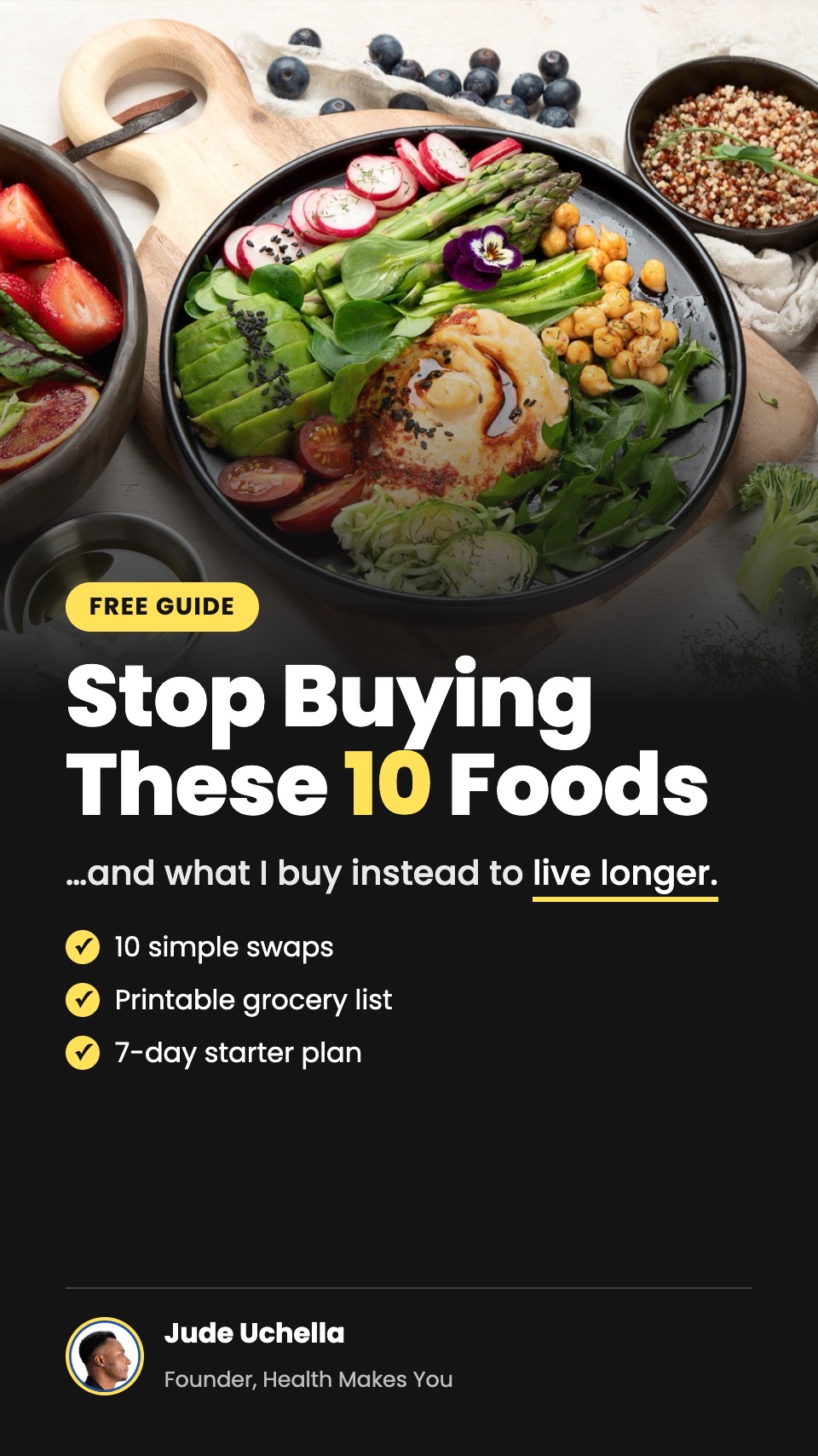
Stop Buying These 10 Foods (and what I buy instead to live longer)
10 simple swaps, a printable grocery list and a 7-day starter plan. Plus one practical health tip from me each week.
Sent! Check your inbox. Your guide is in an email from Jude at Health Makes You.
Not there in a minute? Check your Promotions or spam folder, and move it to your main inbox so you get my weekly tips.
No spam. Unsubscribe any time.

Written by
Jude Uchella
Jude is the founder of Health Makes You, a YouTube channel about the everyday choices that decide how long and how well you live. He turns real research into clear, practical steps anyone can start today.