
Lower back pain can strike at any time, especially in the morning when you’re just trying to get out of bed. For many people, tight hips, stiff joints, or poor sleeping posture can lead to persistent nagging pain that lasts throughout the day.
Not to worry, there are several lower back pain relief stretches you can do in bed to increase blood flow, loosen tight muscles, and improve spinal mobility before your feet even hit the floor. Here are seven of them.
1. Knee-to-Chest Stretch

This gentle stretch targets the lumbar spine and helps release tightness in the glutes and lower back.
How to do it:
- Lie flat on your back with your legs extended.
- Slowly pull one knee toward your chest, clasping your hands around your shin.
- Hold for 20–30 seconds, then switch legs.
- For a deeper stretch, try pulling both knees to your chest at the same time.
Why it helps: This stretch gently flattens the lumbar curve, lengthening tight spinal muscles and promoting flexibility in the sacroiliac region.
Tip: Breathe deeply and avoid tensing your neck or shoulders while holding the stretch.
2. Supine Twist

Also known as a spinal twist, this movement is excellent for decompressing the spine and releasing tension in the lower back and obliques.
How to do it:
- Lie on your back with your knees bent and feet flat on the bed.
- Extend your arms out to the sides in a T-shape.
- Let your knees fall gently to one side while keeping your shoulders flat.
- Hold for 30 seconds, then switch sides.
Why it helps: Twisting improves spinal mobility and stimulates blood flow to the vertebral joints, while also stretching the paraspinal muscles.
Tip: If your knees don’t touch the bed, that’s okay. Use a pillow for support to avoid overstretching.
3. Pelvic Tilts

Pelvic tilts are subtle but powerful exercises that strengthen your core and improve posture alignment.
How to do it:
- Lie on your back with knees bent, feet flat, and arms at your sides.
- Gently arch your lower back, lifting it slightly off the bed.
- Then, press your lower back into the bed by tightening your abdominal muscles.
- Repeat this 10–15 times in a slow, controlled rhythm.
Why it helps: Pelvic tilts activate the transverse abdominis, a key stabilizer of the spine, helping to reduce stress on the lumbar region.
Tip: Focus on controlled motion rather than speed. This is more effective and safer.
4. Figure-4 Stretch
This hip-opening stretch targets the piriformis muscle, which often contributes to lower back discomfort.
How to do it:
- Lie on your back and bend both knees.
- Cross your right ankle over your left thigh to form a figure 4.
- Reach through and clasp your hands behind your left thigh, pulling your leg gently toward your chest.
- Hold for 20–30 seconds, then switch sides.
Why it helps: By loosening tight hips and glutes, this stretch reduces pressure on the sciatic nerve and supports better pelvic alignment.
Tip: Don’t force the stretch; gentle tension is enough for effective results.
5. Child’s Pose (Modified)

Although traditionally done on the floor, a modified version of Child’s Pose can be performed in bed to gently stretch the lower back and hips.
How to do it:
- Sit on your knees with your feet together behind you.
- Lean forward and stretch your arms out in front of you, letting your chest rest toward the mattress.
- Hold for 30–60 seconds, breathing deeply.
Why it helps: This pose elongates the lumbar spine and provides a soothing, restorative release for back muscles.
Tip: Place a pillow under your torso if you need extra support.
6. Cat-Cow Stretch (Spinal Mobilization)
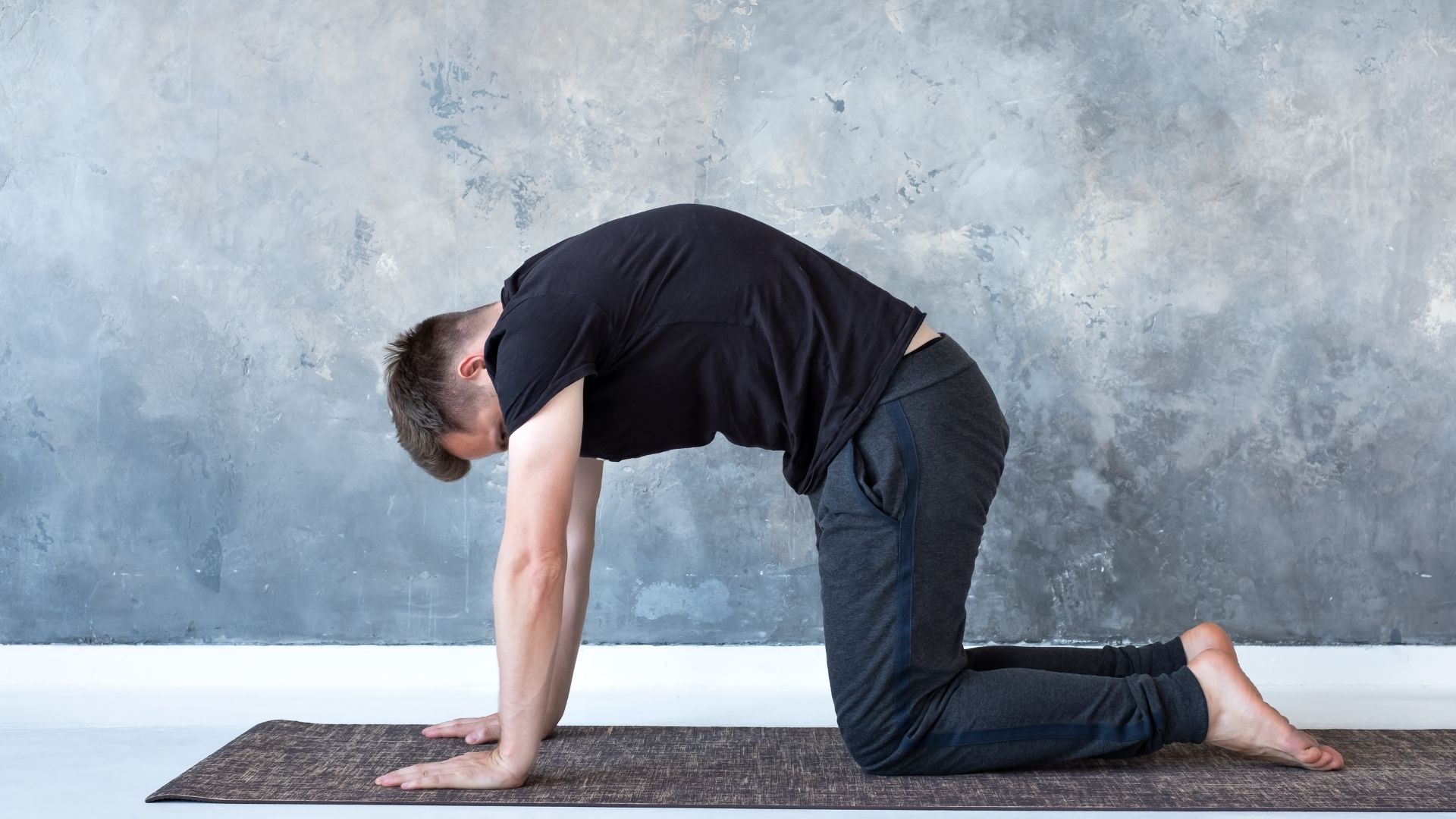
Adapted from yoga, this dynamic movement enhances spinal flexibility and eases lower back stiffness.
How to do it:
- Get on your hands and knees on the bed (tabletop position).
- Inhale as you arch your back, lifting your head and tailbone (Cow).
- Exhale as you round your spine, tucking your chin and pelvis (Cat).
- Continue this motion for 30–60 seconds.
Why it helps: Alternating between flexion and extension promotes spinal mobility and increases circulation to the vertebrae.
Tip: Move with your breath and avoid jerky transitions between positions.
7. Hamstring Stretch (Lying Position)

Tight hamstrings often contribute to lower back pain due to their pull on the pelvis and spine. Stretching them in bed can relieve that tension.
How to do it:
- Lie flat on your back and extend one leg upward toward the ceiling.
- Hold behind your thigh or calf (not the knee) and gently pull the leg toward you.
- Keep the opposite leg bent or flat on the bed.
- Hold for 20–30 seconds, then switch sides.
Why it helps: This stretch eases tension in the posterior chain, reducing strain on the lumbar spine and improving flexibility.
Tip: Use a towel or strap if you can’t comfortably reach your leg.
Conclusion
You don’t need a gym or a physical therapist to find relief from lower back pain. These simple bed-friendly stretches can help loosen tight muscles and improve how you feel each day.
A few minutes of stretching before sleep or after waking can make a noticeable difference in your comfort. Practice these stretches regularly and listen to your body.