Chia pudding made easy with one simple ratio and 5 flavours to try
One simple chia pudding ratio, five make-ahead flavours for busy mornings, what two tablespoons of chia seeds actually contain, and the one safety rule everyone should know.


Chia pudding is one of those foods that looks fancy on Pinterest but takes about two minutes of real work. You stir tiny seeds into milk, leave the jar in the fridge overnight, and wake up to a thick, spoonable breakfast that's ready to grab on the way out the door.
It's also a genuinely useful food. Chia seeds are small, but they pack a surprising amount of fibre, and they're easy to dress up in different ways so you don't get bored. This guide gives you the one ratio you need, five flavours to rotate through the week, and an honest look at what chia seeds can and can't do.
What's actually in chia seeds
Chia seeds come from the Salvia hispanica plant, which was grown as a food crop in Mexico and Guatemala thousands of years ago. According to Harvard's Nutrition Source, two tablespoons (1 ounce, or 28 grams) contain about 140 calories, 4 grams of protein, 11 grams of fibre and 7 grams of unsaturated fat, plus around 18% of the recommended daily calcium and small amounts of zinc and copper.
The fibre is the headline. Harvard notes that adults need at least 25 to 35 grams of fibre a day, but most Americans get only about 15. One serving of chia pudding can close a big part of that gap before 9 a.m.
Chia is also the richest plant source of omega-3 fats, in the form called alpha-linolenic acid (ALA). That's a different form from the omega-3s in oily fish, and Harvard points out that the research is stronger for diets rich in omega-3 foods in general than for chia seeds on their own. So it's best to think of chia as one helpful part of a good breakfast, not a superfood that fixes everything.
The basic chia pudding ratio
Here's the only thing you need to remember: 3 tablespoons of chia seeds to 1 cup of liquid.
- Put the chia seeds and milk in a jar. Any milk works: dairy, soy, oat, almond or coconut.
- Add a little sweetness if you like, such as one or two teaspoons of maple syrup or honey, and a small pinch of salt.
- Stir well, wait five minutes, then stir again. This second stir is the trick that stops the seeds clumping at the bottom.
- Cover and refrigerate for at least two hours, or overnight.
That makes one large serving or two smaller ones. If you like it thicker, add another half tablespoon of seeds. If you like it looser, add a splash more milk in the morning.
Your choice of milk changes the nutrition. Dairy milk and soy milk add more protein, while many almond and oat milks are lower in protein unless they're fortified. If you want a more filling breakfast, stir in a few spoonfuls of Greek yogurt before serving.
5 easy flavours for the week
1. Berry vanilla. Add half a teaspoon of vanilla extract to the basic mix. In the morning, top with a handful of fresh or thawed frozen berries. Mashing a few berries into the pudding turns it a pretty pink colour.
2. Chocolate peanut butter. Stir one tablespoon of unsweetened cocoa powder and one tablespoon of peanut butter into the milk before adding the seeds. Top with sliced banana. It tastes like dessert but it's still a solid breakfast.
3. Mango coconut. Use half coconut milk and half regular milk. Top with diced mango, either fresh or frozen, and a sprinkle of toasted coconut.
4. Apple pie. Add a quarter teaspoon of cinnamon and a pinch of nutmeg. Top with chopped apple that you've warmed in a pan for two minutes, plus a few walnuts. It's perfect for cold mornings.
5. Pumpkin spice. Whisk two tablespoons of canned pumpkin puree and half a teaspoon of pumpkin pie spice into the milk. Top with a spoonful of yogurt and a few pecans. This one is a great way to use up leftover pumpkin in November.
Make-ahead tips for busy mornings
Chia pudding keeps well in the fridge for about four days, which makes it ideal for meal prep. On a Sunday evening, line up four jars, add the basic mix to each one, and change the flavour by jar. Add fresh fruit and crunchy toppings on the day you eat them so they stay fresh.
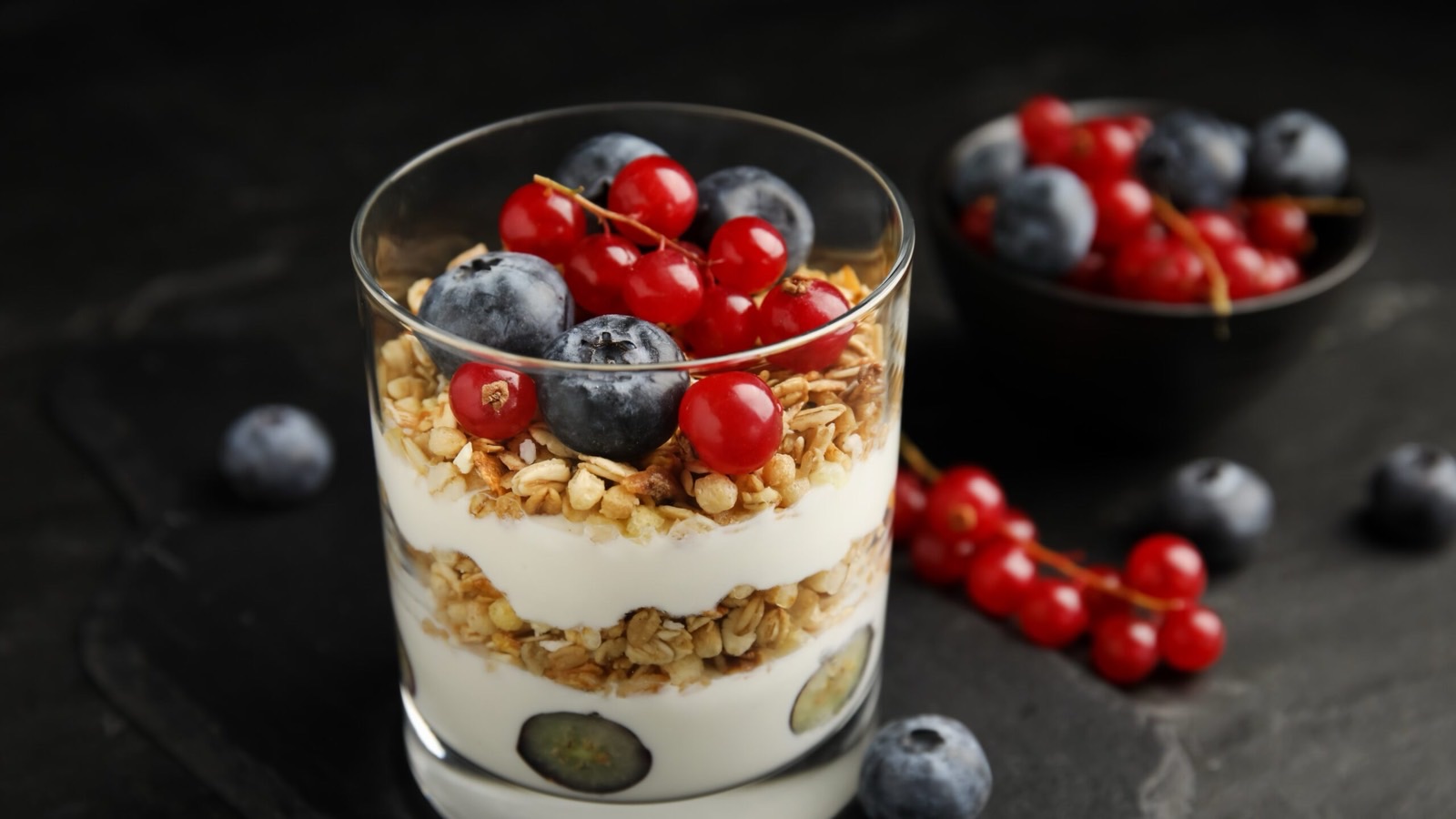
For a parfait like the one in the picture, layer chia pudding with yogurt and fruit in a glass, then add granola just before eating. Layers look lovely, and they make a small serving feel generous.
One safety rule: always soak your chia
Chia seeds can absorb a lot of liquid and swell quickly. Harvard's Nutrition Source describes a case presented at the American College of Gastroenterology meeting in 2014, in which a person ate dry chia seeds and then drank water, and the seeds expanded and blocked the oesophagus. The advice is simple: eat chia seeds already soaked in liquid, or mixed into a moist food like oatmeal or yogurt, and never eat a spoonful of dry seeds on its own. People who have trouble swallowing should be especially careful.
It's also worth increasing fibre gradually. If you're not used to high-fibre foods, start with a smaller serving of chia pudding and drink plenty of water during the day, because a sudden jump in fibre can cause bloating.
Who might want to check first
Chia is an everyday food and most people can enjoy it. If you're on a medically prescribed diet, have a digestive condition, or have been told to limit fibre, check with your doctor or a registered dietitian before making it a daily habit.
The bottom line
Chia pudding is cheap, quick and easy to love. Remember the 3-to-1 ratio, stir twice, soak overnight, and rotate a few flavours so it never gets boring. Paired with fruit and a little yogurt, it's a breakfast that brings real fibre to your day. If you like make-ahead breakfasts, our article on anti-inflammatory meals uses the same prep-once, eat-all-week idea for dinner.
Sources
- Chia seeds (Harvard T.H. Chan School of Public Health, The Nutrition Source)
- Fiber (Harvard T.H. Chan School of Public Health, The Nutrition Source)
- Protein (Harvard T.H. Chan School of Public Health, The Nutrition Source)

Written by
Jude Uchella
Jude is the founder of Health Makes You, a YouTube channel about the everyday choices that decide how long and how well you live. He turns real research into clear, practical steps anyone can start today.