Why a 90-minute Sunday reset makes the whole week healthier
A simple Sunday reset that actually helps your health: plan meals, prep a few basics, reset your space, book in movement and protect your sleep, all in about 90 minutes.


"Sunday reset" videos are everywhere right now. Some of them are lovely, with fresh flowers, scented candles and colour-coded planners. Some of them look like a full-time job. The good news is that you don't need four hours or a perfect home to get the benefit. A useful Sunday reset is really just one question: what can I do today that will make healthy choices easier on a busy Wednesday?
This plan keeps it to about 90 minutes and focuses on the things that make the biggest difference to your health during the week: food, movement, sleep and a bit of mental breathing room.
Why a weekly reset works
Most healthy habits fail on busy weekdays, not because we don't know what to do, but because we're tired and the easy option is right there. A reset moves the decisions to a calmer moment.
There's some research behind this. A large French study of more than 40,000 adults, published in the International Journal of Behavioral Nutrition and Physical Activity, found that people who planned their meals ahead were more likely to have a varied diet and better overall diet quality, and were less likely to be obese. That's an observational study, so it can't prove planning causes the difference, but it fits what most people find in real life: a plan makes it easier to eat well.
Habits also take time. In a study from University College London, published in the European Journal of Social Psychology, it took volunteers anywhere from 18 to 254 days for a new daily behaviour to feel automatic. A weekly reset gives you a regular moment to restart without guilt when a week goes off track.
The 90-minute Sunday reset plan
You can do this in one go or split it across the afternoon. Put on music or a podcast and keep it light.
1. Look at the week ahead (10 minutes)
Open your calendar and notice the busy days: late meetings, school runs, a long shift. Those are the days you'll want the easiest meals and the most realistic workouts. Write down three or four things that must get done this week. Getting them on paper takes them out of your head.
2. Plan your meals and write the grocery list (15 minutes)
You don't need to plan every bite. Choose four or five dinners and two breakfasts or lunches you'll repeat. Build each dinner around the same simple idea: a protein, a vegetable or two, and a whole grain or potato. Check what's already in the fridge and freezer first, then write your list by store section so shopping is faster.
3. Prep three basics (35 minutes)
This is the step that pays off most. You're not cooking every meal, just a few building blocks:
- A big batch of grains, such as brown rice, quinoa or wholewheat pasta.
- A tray of roasted vegetables, such as peppers, onions, broccoli, carrots or sweet potatoes, tossed in olive oil.
- One protein, such as a tray of chicken thighs, a pot of lentils, a dozen hard-boiled eggs or a can of beans rinsed and ready.
Wash and chop some raw vegetables and fruit for snacks while things cook, and make one jar of simple dressing. Store everything in clear containers so you can see it.
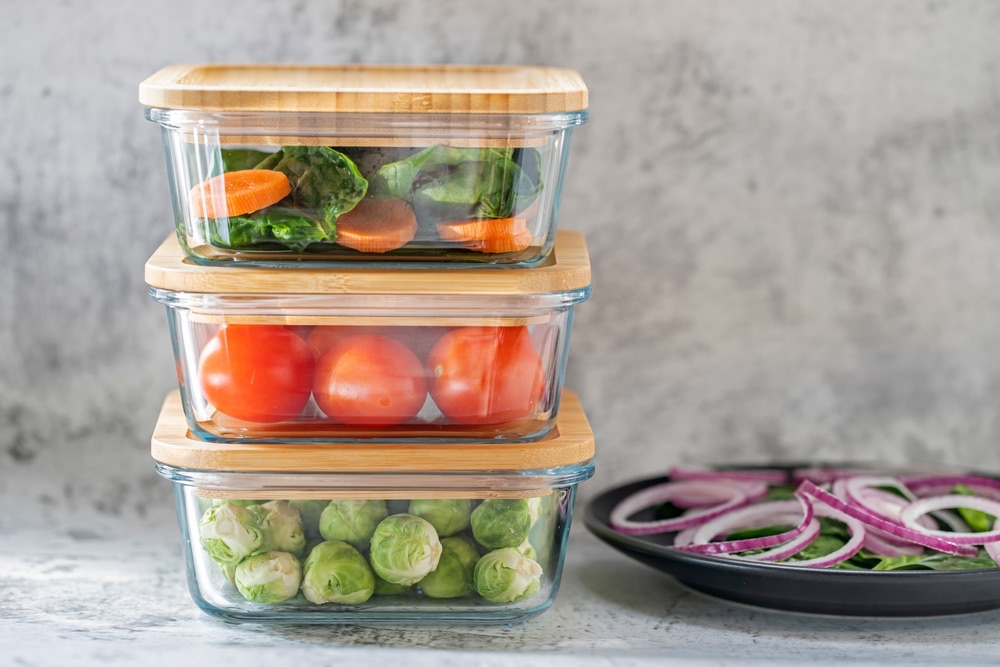
With those basics in the fridge, weeknight dinners become assembly jobs: a grain bowl one night, a wrap the next, a quick stir-fry after that. If you like the idea of a full plan, our 7-day anti-inflammatory dinner plan works well with Sunday prep.
4. Reset your space (15 minutes)
Pick only the jobs that make your weekday mornings smoother: clear the kitchen counter, start a load of laundry, empty the bins, and put away the clutter in the room where you start your day. Set a timer and stop when it rings. The goal is calm, not perfect.
5. Book your movement (5 minutes)
Treat exercise like an appointment. The CDC recommends that adults get at least 150 minutes of moderate activity a week, such as 30 minutes on five days, plus two days of muscle-strengthening activity. Look at your calendar and choose exactly when those sessions will happen, even if some are just a brisk 20-minute walk at lunch. Lay out your trainers and workout clothes for Monday.
6. Set up a good Sunday night (10 minutes)
The way you sleep on Sunday shapes your Monday. Charge your phone outside the bedroom, set your alarm, and aim to go to bed at your usual weekday time, not two hours later. The National Heart, Lung, and Blood Institute advises keeping the difference between your weeknight and weekend sleep schedule to no more than about an hour. Our guide to a bedtime routine for better sleep has a simple wind-down plan.
Make it your own
Some weeks you'll have time for the whole plan, and some weeks you'll only manage the grocery list. That's fine. If you only do one thing, do the meal plan and the shopping. If you do two, add the prep. Everything else is a bonus.
It also helps to make the reset something you look forward to. Pair it with a favourite podcast, a pot of tea or a phone call with a friend. Families can split the jobs: one person chops, one person tidies, the kids pack their own bags for school.
Common mistakes
Trying to do everything. A reset that takes your whole Sunday leaves you exhausted before Monday. Keep it to 90 minutes.
Prepping food you don't enjoy. If nobody in your house likes quinoa, cook rice. The healthiest meal is the one that actually gets eaten.
Skipping the rest. Sunday is still a day off. Leave time to see people, go outside and do nothing at all.
The bottom line
A Sunday reset isn't about a perfect home or a perfect diet. It's 90 minutes of small, practical jobs that make the healthy choice the easy choice during the week: plan meals, prep a few basics, reset one space, book your movement, and protect your Sunday night sleep. Do it most weeks, and it quietly becomes one of the most useful habits you have.
Sources
- Meal planning is associated with food variety, diet quality and body weight status in a large sample of French adults (Ducrot et al., International Journal of Behavioral Nutrition and Physical Activity, 2017)
- How are habits formed: modelling habit formation in the real world (Lally et al., European Journal of Social Psychology, 2010)
- Adult activity: an overview (Centers for Disease Control and Prevention)
- Healthy sleep habits (National Heart, Lung, and Blood Institute)

Written by
Jude Uchella
Jude is the founder of Health Makes You, a YouTube channel about the everyday choices that decide how long and how well you live. He turns real research into clear, practical steps anyone can start today.