
Hip pain is one of the most common musculoskeletal complaints among adults, often caused by factors like poor posture, sedentary lifestyle, overuse, or underlying conditions such as arthritis or sciatica. Whether you’re sitting for long hours, recovering from an injury, or simply dealing with age-related stiffness, stretching can offer significant natural relief.
In this guide, we’ll explore a series of easy, low-impact stretches that help relieve hip pain naturally without the need for expensive equipment or professional supervision.
Why Stretching Helps with Hip Pain
Tight or imbalanced muscles are a common contributor to hip pain. For example, sedentary lifestyles often cause the hip flexors to tighten and the glutes to weaken. This muscular imbalance can pull the pelvis out of alignment, placing extra strain on the hip joint and lower back.
Stretching not only increases flexibility and blood flow to the affected area but also releases built-up tension, which helps restore balance and range of motion. Over time, regular stretching may also prevent the recurrence of pain by addressing root causes like poor posture or repetitive strain.
Easy Stretches That Help Relieve Hip Pain Naturally
1. Supine Figure-Four Stretch
Target Area: Glutes, piriformis, lower back
How to Do It:
- Lie flat on your back with your knees bent and feet on the floor.
- Cross your right ankle over your left thigh, forming a “4” shape.
- Thread your right hand through your legs and clasp your hands behind your left thigh.
- Gently pull your thigh toward your chest until you feel a stretch in your right hip.
- Hold for 20–30 seconds, then switch sides.
Why It Works: This stretch is excellent for loosening the piriformis muscle, which can become tight and compress the sciatic nerve—often a source of hip or buttock pain.
2. Hip Flexor Stretch (Runner’s Lunge)
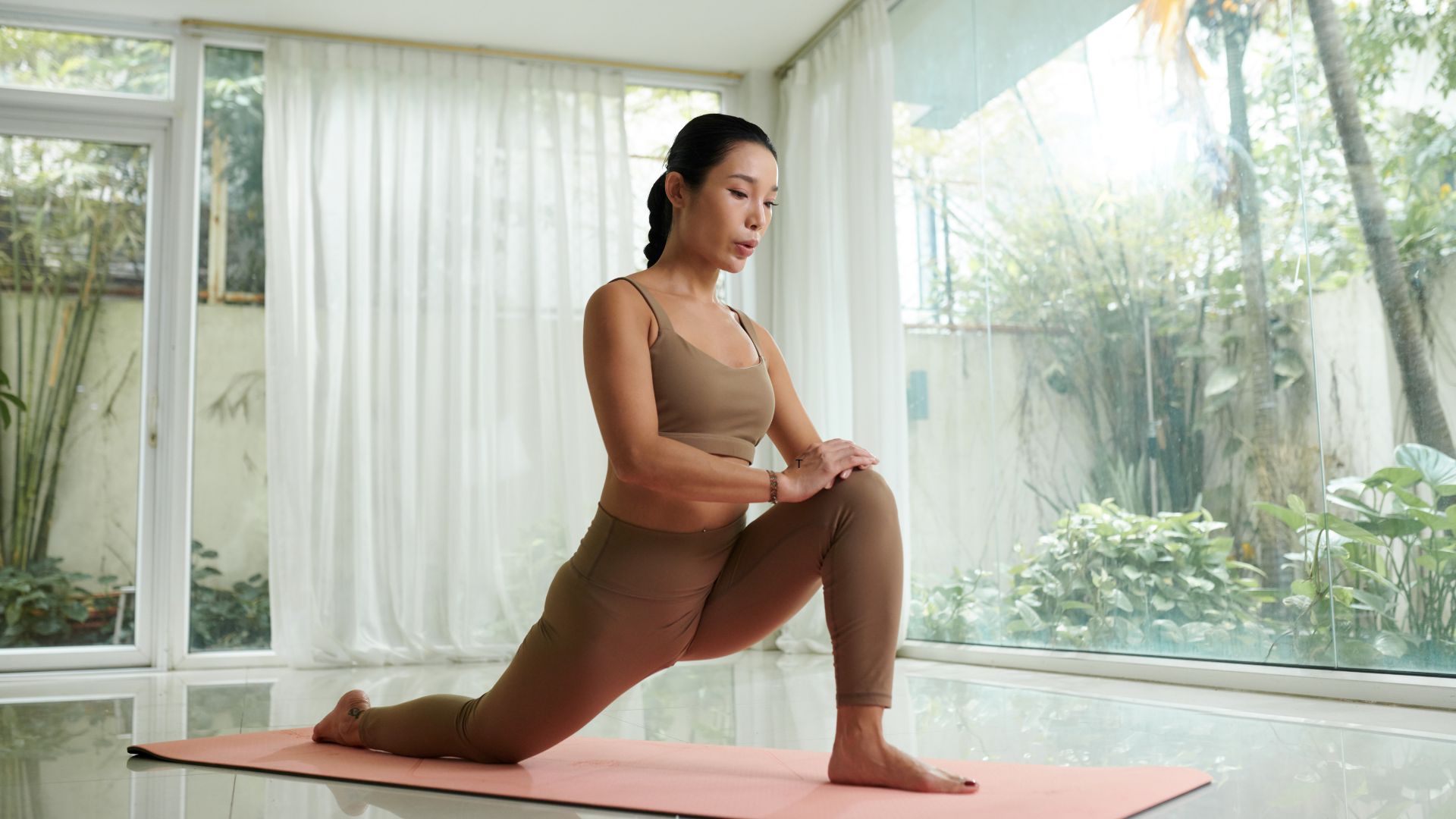
Target Area: Hip flexors, quadriceps
How to Do It:
- Start in a kneeling position with one foot forward and the other knee on the floor.
- Shift your weight forward so your front knee is directly over your ankle.
- Keep your chest upright and feel a stretch through the front of the hip of the kneeling leg.
- Hold for 30 seconds and repeat on the opposite side.
Why It Works: Prolonged sitting can cause hip flexors (particularly the iliopsoas) to shorten. This stretch helps open up the front of the hips, relieving pressure and restoring proper posture.
3. Butterfly Stretch
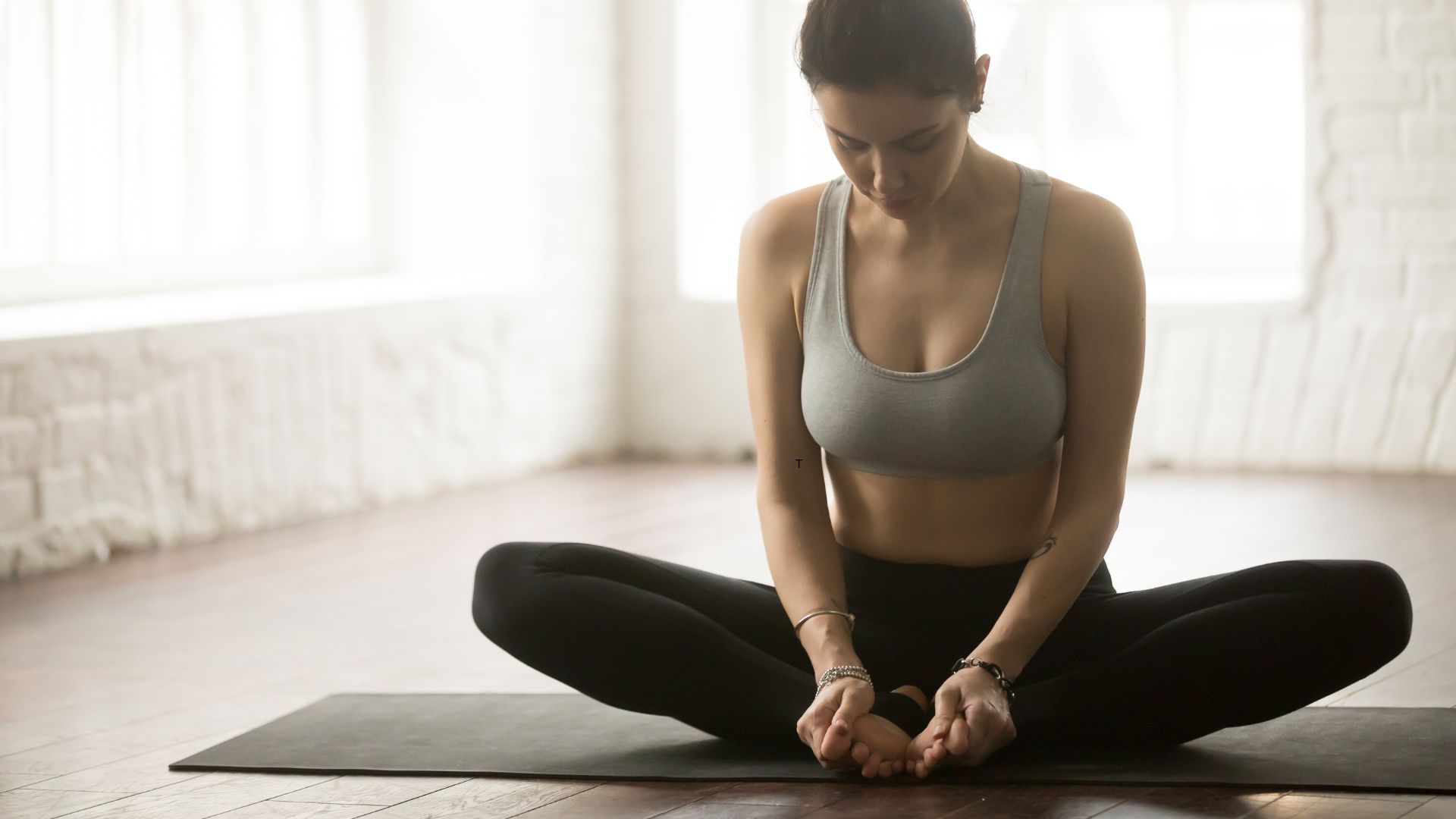
Target Area: Inner thighs, hips, groin
How to Do It:
- Sit on the floor with your feet together and knees dropped outward.
- Hold your feet with your hands and gently press your knees toward the floor.
- Keep your spine straight and lean slightly forward to deepen the stretch.
- Hold for 30 seconds.
Why It Works: This stretch opens the hip joints and groin, reducing stiffness and improving mobility.
4. Seated Spinal Twist
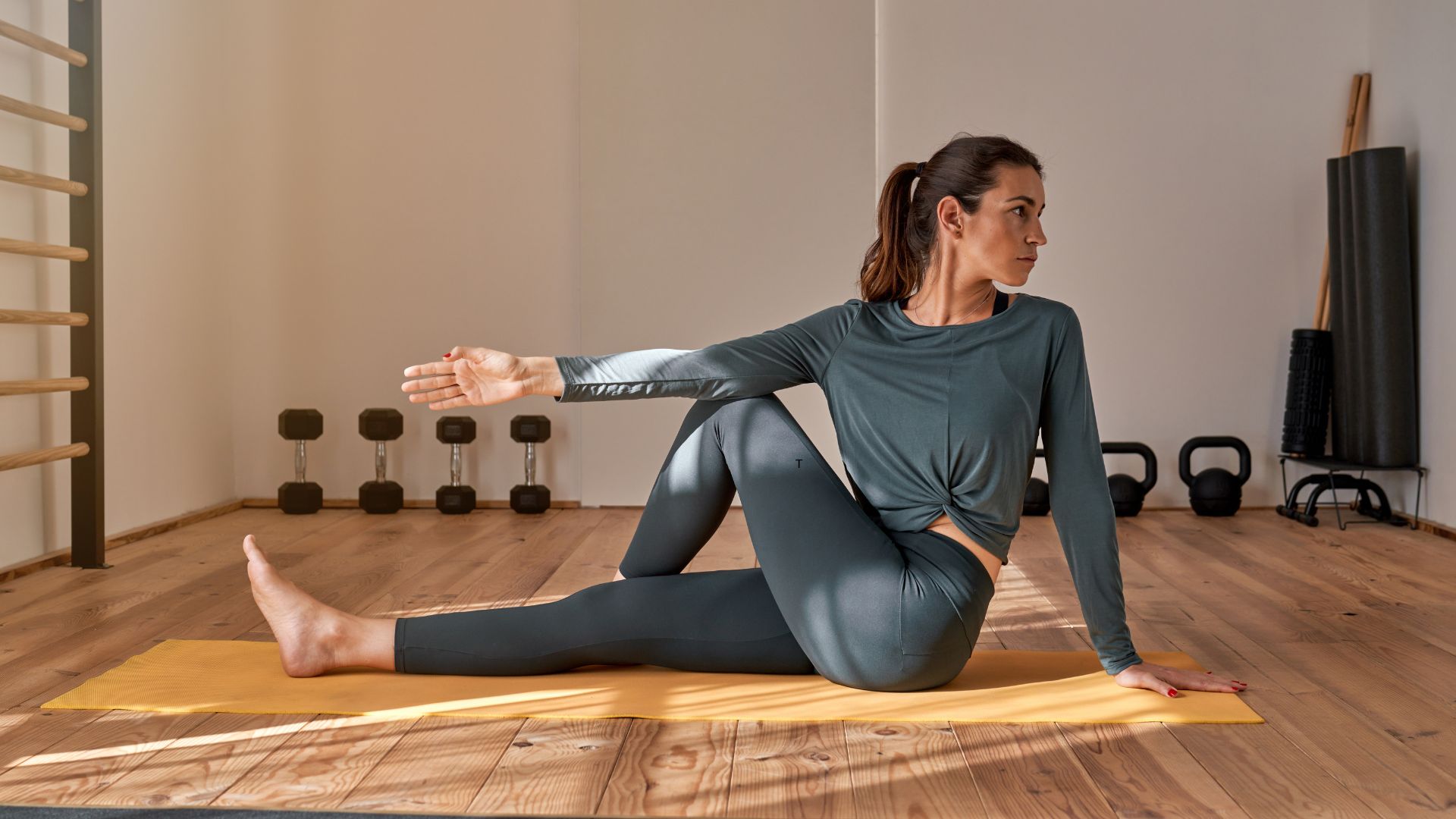
Target Area: Lower back, glutes, outer hip
How to Do It:
- Sit on the floor with your legs extended.
- Cross your right foot over your left thigh and place it on the floor.
- Place your right hand behind you and your left elbow on the outside of your right knee.
- Twist your torso to the right, looking over your shoulder.
- Hold for 20–30 seconds, then switch sides.
Why It Works: Twisting stretches the glutes and outer hips, areas that are often tight in those with lower back or hip pain. It also aids spinal alignment.
5. Reclining Pigeon Pose
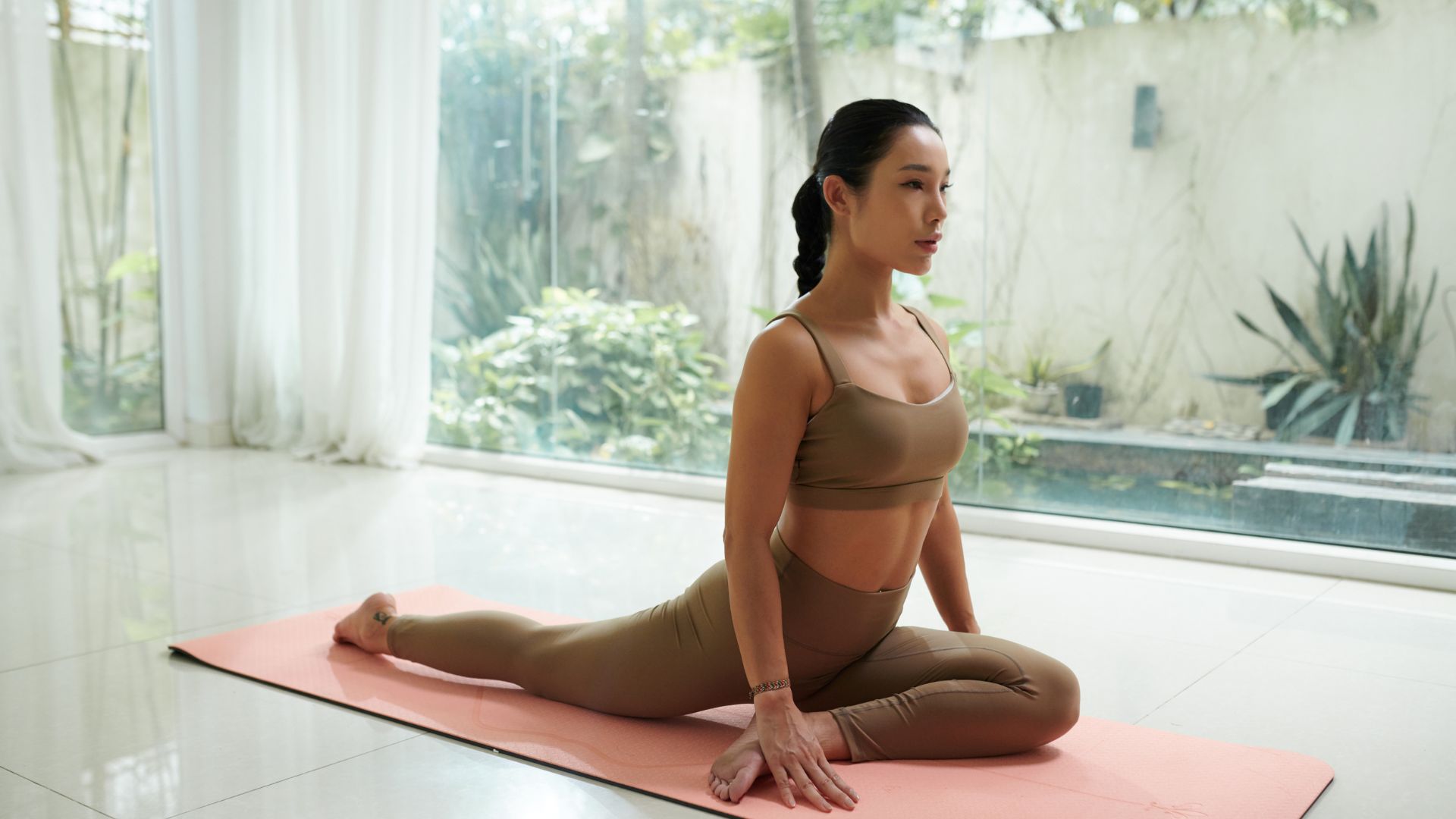
Target Area: Glutes, hip rotators
How to Do It:
- Lie on your back and bend your knees.
- Cross one ankle over the opposite knee, like in the figure-four stretch.
- Instead of pulling the leg toward you, let your legs rest in this position.
- Place your arms out to the side and relax for up to one minute.
Why It Works: This passive stretch targets the same muscles as figure-four but relies more on gravity, making it gentler and ideal for people with limited mobility.
6. Standing Iliotibial (IT) Band Stretch
Target Area: Outer hip, IT band
How to Do It:
- Stand with your feet together.
- Cross your right leg behind your left.
- Reach your right arm overhead and lean to the left side until you feel a stretch along the outer hip and thigh.
- Hold for 20 seconds, then repeat on the other side.
Why It Works: The IT band can contribute to hip and knee pain when tight. Stretching this area helps relieve lateral tension across the hip joint.
7. Child’s Pose with Side Reach
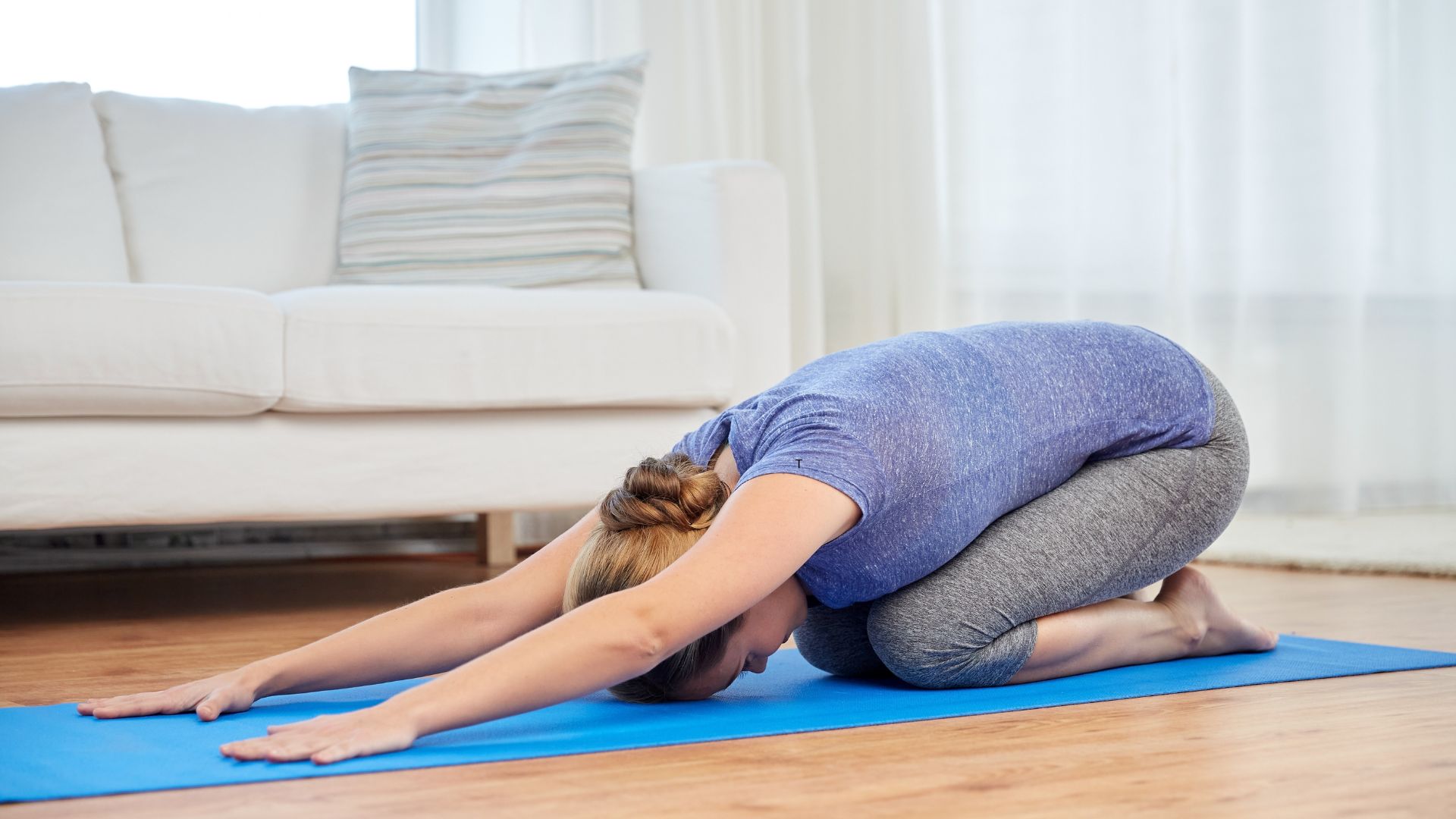
Target Area: Lower back, hips, sides of torso
How to Do It:
- Start on all fours and sit your hips back onto your heels with arms extended forward.
- Walk your hands to the right to stretch the left side of your torso and hips.
- Hold for 30 seconds, then switch sides.
Why It Works: This variation of Child’s Pose not only stretches the hips and back but also targets the oblique muscles, which can contribute to hip tightness if neglected.
Tips for Stretching Safely
- Warm up first: Do light cardio (like walking or marching in place) before stretching to improve circulation.
- Breathe deeply: Inhale through your nose and exhale slowly to help muscles release tension.
- Avoid bouncing: Always stretch in a controlled, steady manner. Bouncing can cause strain or injury.
- Stop if it hurts: A stretch should feel tight but never painful. Sharp or shooting pain is a sign to stop.
When to See a Professional
If your hip pain persists despite stretching or if it’s accompanied by swelling, numbness, or severe mobility limitations, it’s time to consult a medical professional. A physical therapist can provide personalized stretches and assess muscle imbalances, while a physician can rule out underlying conditions such as bursitis, arthritis, or nerve impingement.
Conclusion
Relieving hip pain doesn’t always require a prescription or invasive procedures. With just a few minutes a day, a targeted stretching routine can loosen tight muscles, restore alignment, and reduce discomfort naturally.
Pair these movements with proper hydration, light activity, and good posture habits, and your hips will have a better chance at long-term health and comfort.