This 20-minute home workout routine works your whole body with no gym
A 20-minute full-body workout routine you can do in your living room, with easier and harder versions of every move, a simple weekly plan, and how it fits the official activity guidelines.

"Workout routines" is one of the fastest-growing health searches on Pinterest this year, up 2,000% on last year. It makes sense. Gyms get crowded and expensive, the weather turns, and a lot of people would simply rather move at home. The catch is that most online routines are either far too hard for beginners or so long that you give up after a week.
This one is built to last. It takes 20 minutes, needs no equipment, and works every major muscle group. Every move has an easier and a harder version, so it grows with you. Do it two or three times a week and you'll cover the strength part of the official exercise guidelines without leaving the house.
Why strength work at home matters
The Centers for Disease Control and Prevention (CDC) says adults need at least 150 minutes of moderate-intensity activity a week, such as brisk walking. That's the part most people know. The part they forget is the second half: at least two days a week of muscle-strengthening activity that works all the major muscle groups, meaning the legs, hips, back, abdomen, chest, shoulders and arms.
Your own body weight is enough to do that. Squats, push-ups, lunges and planks have been around for so long because they work. They train the movements you use every day, like getting up from a chair, carrying shopping and climbing stairs, and the CDC is clear that some activity is better than none. You don't need to be fit to start. You start in order to get fit.
Before you begin
Clear a space about the size of an exercise mat or a big towel, wear comfortable shoes or go barefoot on a non-slip floor, and keep a sturdy chair nearby. The chair is your best friend: it makes squats, push-ups and lunges easier while you build strength. A phone timer that beeps every 45 seconds and every 15 seconds makes the circuit simple to follow. Light dumbbells or two filled water bottles are optional for the lunges later on.
The 20-minute full-body routine
Warm-up (3 minutes)
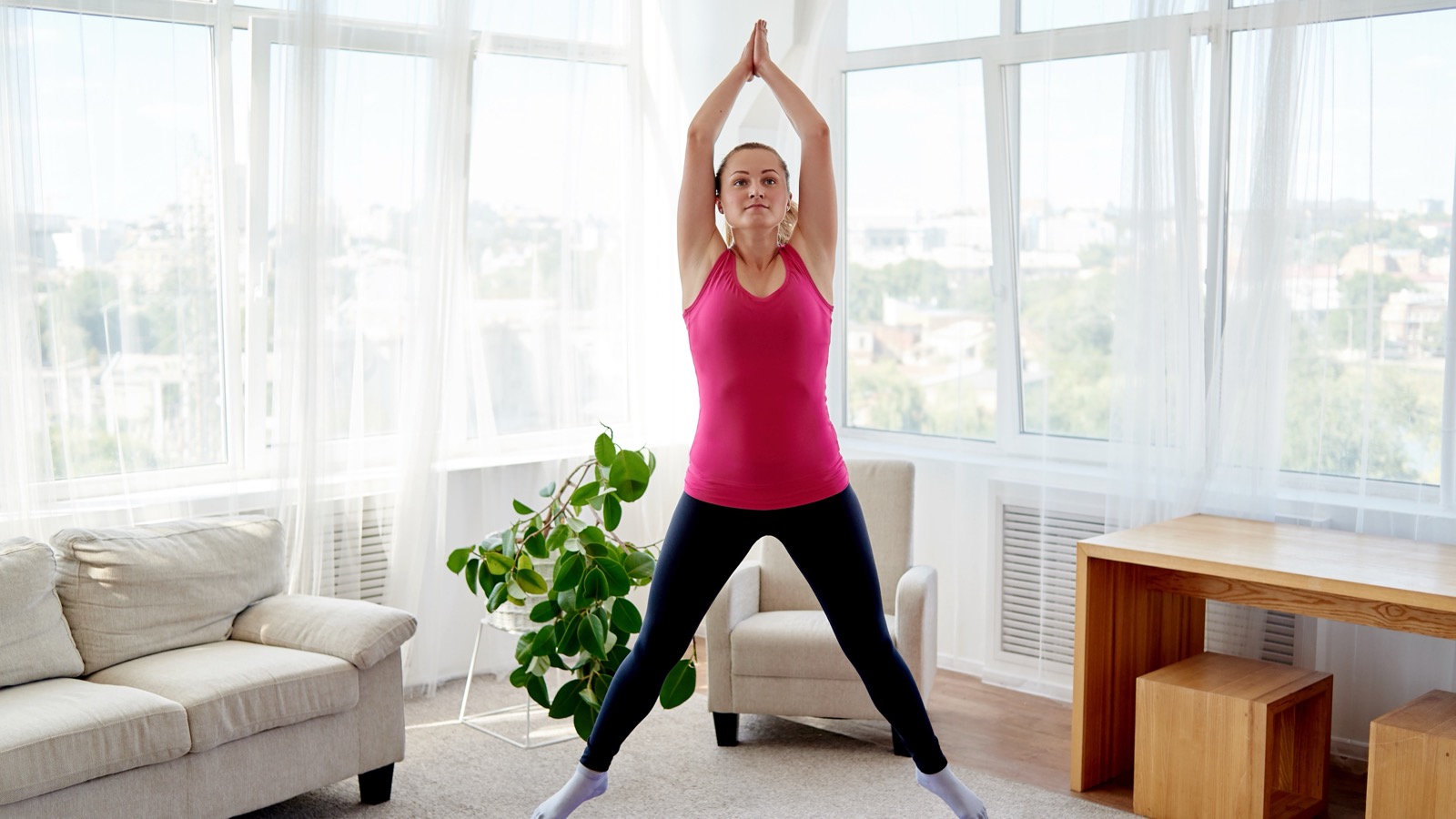
Do each for about 30 seconds: march on the spot, arm circles forwards and backwards, hip circles, step-jacks (step one foot out to the side while raising your arms, then switch), gentle side bends, and finally faster marching with your knees a little higher. You should feel warm and a little out of breath, not tired.
Main circuit (15 minutes)
Do each move for 45 seconds, then rest for 15 seconds before the next one. One round of all five moves takes 5 minutes. Do 3 rounds.
1. Squats. Stand with your feet about hip-width apart, push your hips back as if sitting into a chair, then stand back up through your heels. Easier: sit down onto a real chair and stand up again. Harder: pause for two seconds at the bottom.
2. Push-ups. Hands slightly wider than your shoulders, body in a straight line, lower your chest towards the floor and push back up. Easier: push against a kitchen counter or a wall. Harder: full push-ups from your toes.
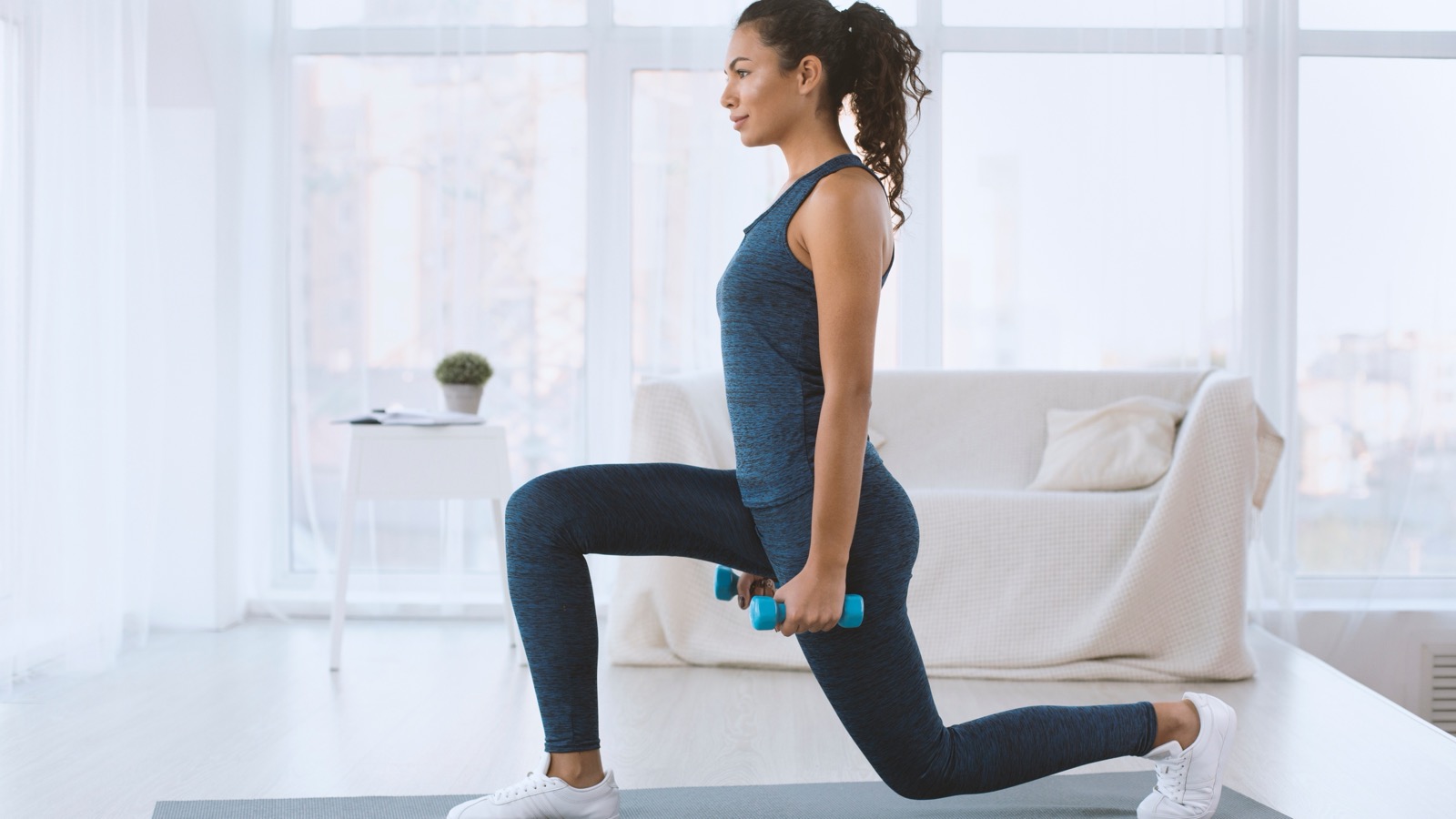
3. Reverse lunges. Step one foot back and lower your back knee towards the floor, then return to standing. Alternate legs. Easier: hold the back of a chair for balance and only go halfway down. Harder: hold a dumbbell or water bottle in each hand, like the photo at the top of this page.
4. Glute bridges. Lie on your back with your knees bent and feet flat. Squeeze your bottom and lift your hips until your body makes a straight line from shoulders to knees, then lower slowly. Easier: smaller lifts. Harder: hold at the top for three seconds each time.
5. Plank. Rest on your forearms and toes with your body straight, tummy tight and hips level. Breathe normally. Easier: rest on your knees instead of your toes, or do it with your forearms on a sofa or bench. Harder: slowly tap one shoulder with the opposite hand while holding the plank.
Cool-down (2 minutes)
Walk slowly around the room for 30 seconds, then hold a few gentle stretches for about 20 seconds each: a standing calf stretch against a wall, a standing thigh stretch holding a chair, a chest stretch with your hands clasped behind your back, and a slow forward fold with soft knees.
Your 4-week plan
You'll get the most out of this routine by building up slowly rather than pushing hard in week one.
- Week 1: 2 sessions. Use the easier version of every move and do only 2 rounds if 3 feels like too much. Focus on good form.
- Week 2: 2 to 3 sessions. Aim for all 3 rounds. Swap in the standard version of any move that now feels easy.
- Week 3: 3 sessions. Try the harder version of one or two moves, or add a fourth round once a week.
- Week 4: 3 sessions. Change the work and rest to 50 seconds on and 10 seconds off for an extra challenge.
Leave at least one day between sessions so your muscles can recover. On the other days, a brisk walk is the perfect partner, and it counts towards your 150 minutes. Our 4-week plan for walking at home slots right in alongside this routine.
Tips that make it stick
Same time, same place. Tie the workout to something you already do, like straight after your morning coffee or before you start dinner. Habits stick better when they have a fixed spot in the day.
Write down your numbers. Note how many squats or push-ups you managed in 45 seconds. Watching those numbers go up over four weeks is far more motivating than the mirror.
Count good reps, not fast ones. Slow, controlled movements work the muscles harder and are kinder to your joints than rushing.
Expect some soreness. Mild muscle soreness a day or two after a new workout is normal and usually fades within a few days. Sharp pain during a move is different. Stop that exercise and try the easier version instead.
A quick safety note
This routine is designed for healthy adults. If you have a heart condition, high blood pressure, joint problems, or you've been inactive for a long time, check with your doctor before starting a new exercise plan. The same goes if you're pregnant or recovering from an injury. Stop and get help straight away if you feel chest pain, dizziness or unusual shortness of breath.
The bottom line
You don't need a gym, a membership or an hour a day to get stronger. Twenty minutes, five classic moves and a chair you already own are enough to cover the strength part of the activity guidelines. Start with the easy versions, show up two or three times a week, and in four weeks you'll be surprised at what your body can do.
Sources
- Adult activity: an overview (Centers for Disease Control and Prevention)
- Physical Activity Guidelines for Americans (US Department of Health and Human Services)

Written by
Jude Uchella
Jude is the founder of Health Makes You, a YouTube channel about the everyday choices that decide how long and how well you live. He turns real research into clear, practical steps anyone can start today.