Is spaghetti squash really a good swap for pasta? 5 easy recipes to try
How spaghetti squash compares with pasta on calories, carbs and fibre, the easiest way to cook it so the strands come out long and not soggy, and five simple recipes for busy weeknights.

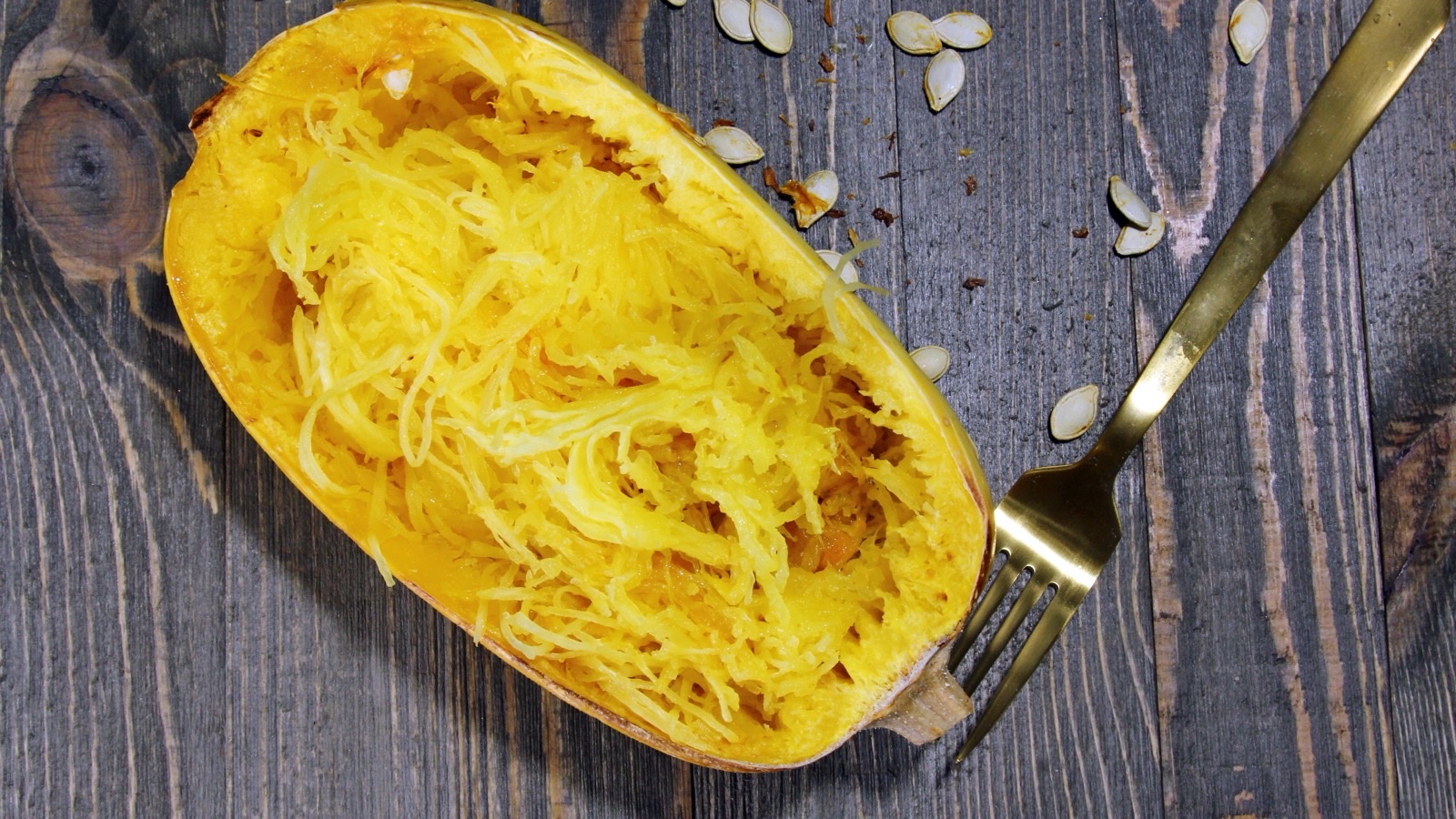
Spaghetti squash is one of the strangest vegetables in the shop. From the outside it looks like a plain yellow melon. Roast it, run a fork through the flesh, and it falls apart into long golden strands that look a lot like noodles. No wonder it's one of the most searched healthy recipes on Pinterest every autumn.
But is it really a swap for pasta, or just a vegetable pretending to be one? This guide looks at the actual numbers, shows you the easiest way to cook it, and gives you five recipes that make the most of what spaghetti squash does well.
Spaghetti squash vs pasta: the real numbers
Here's how one cup of each compares, using figures from the US Department of Agriculture's FoodData Central database.
- Cooked spaghetti squash (1 cup, about 155 grams): around 42 calories, 10 grams of carbohydrate and just over 2 grams of fibre.
- Cooked white spaghetti (1 cup, about 140 grams): around 220 calories, 43 grams of carbohydrate and about 2.5 grams of fibre.
So a cup of spaghetti squash has roughly a fifth of the calories and a quarter of the carbs of the same amount of pasta. If you're watching your portions, or you just want a lighter dinner that still feels like a big bowl of food, that's a real difference.
There's a trade-off, though. Pasta has more protein (around 8 grams a cup) and more staying power, while spaghetti squash is mostly water. A bowl of squash on its own can leave you hungry an hour later. The recipes below get around that by pairing it with beans, eggs, meat, cheese or nuts, so you end up with a full meal rather than a side dish.
It also helps to be honest about the taste. Spaghetti squash is mild and slightly sweet, and the texture is more tender-crunchy than chewy. It won't fool anyone into thinking it's linguine. Think of it as its own thing that happens to love pasta sauces.
How to cook spaghetti squash so it isn't soggy
The most common complaint is watery squash. These steps fix it.
- Soften it before cutting. The skin is tough. The Harvard T.H. Chan School of Public Health's Nutrition Source suggests making a few slits in thick-skinned squash and microwaving it for about 5 minutes. Let it cool for a few minutes, then slice it.
- Choose your cut. Halving it lengthwise is the classic method. For longer strands, cut it crosswise into rings about 1 inch thick instead, because the strands run around the squash, not from end to end.
- Scoop out the seeds. Use a spoon. You can rinse and roast the seeds like pumpkin seeds.
- Roast hot. Brush the cut sides with a little olive oil, season with salt and pepper, and place them cut side down on a lined baking tray. Roast at 400°F (200°C) for 35 to 45 minutes for halves, or 25 to 30 minutes for rings, until a fork slides in easily.
- Don't overcook it. Overdone squash turns mushy. You want the strands tender but still with a little bite.
- Rake and drain. Use a fork to scrape the flesh into strands, then let them sit in a colander for a few minutes, or pat them with a clean towel, before adding sauce.
A medium squash of around 3 pounds gives you roughly 4 cups of strands, enough for four servings.
5 easy spaghetti squash recipes
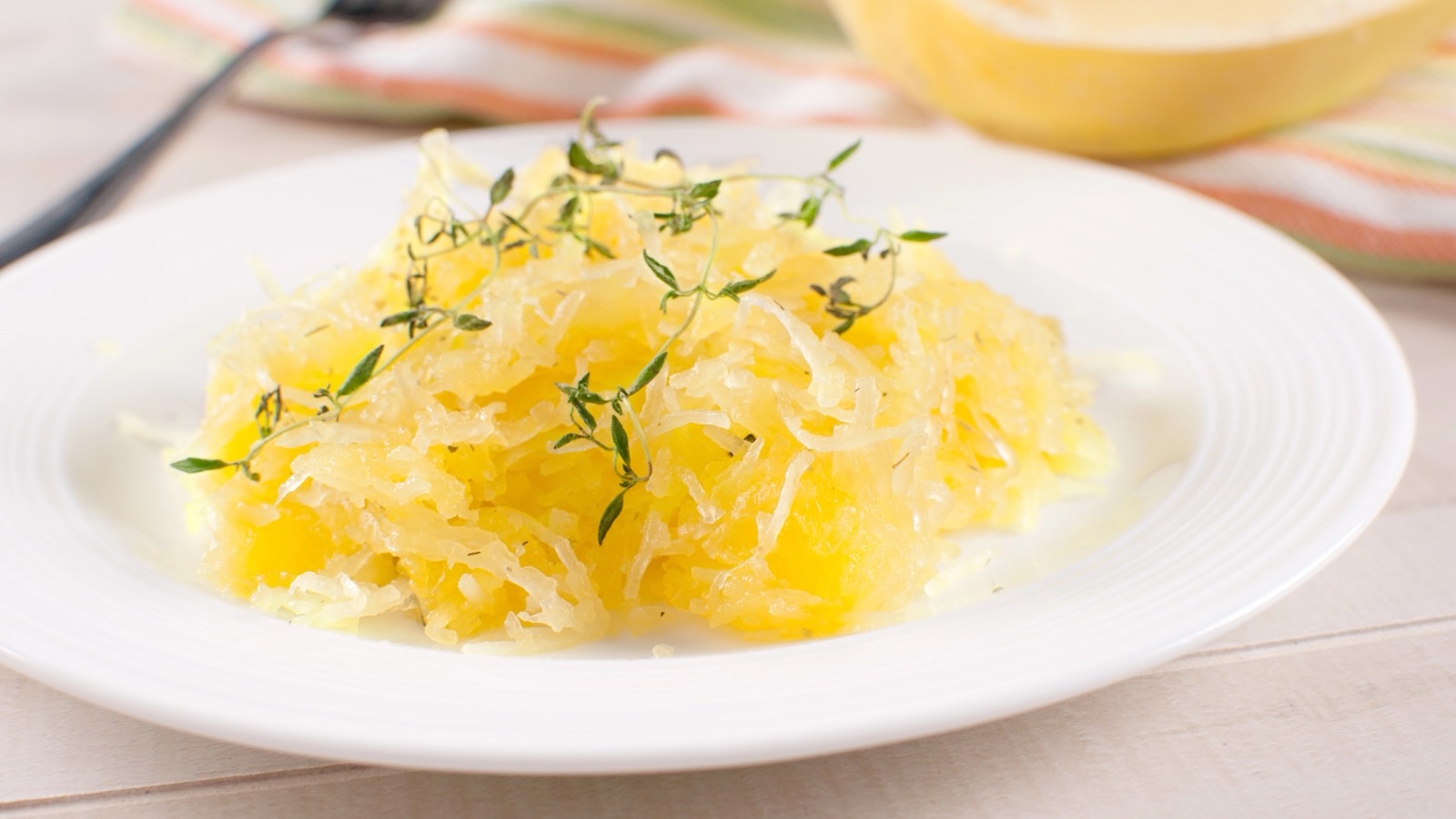
1. Garlic parmesan with spinach. Warm two cloves of sliced garlic in a tablespoon of olive oil, add two big handfuls of spinach until wilted, then toss in the squash strands with a handful of grated parmesan and black pepper. Top with a fried or poached egg for protein. It's ready in ten minutes once the squash is cooked.
2. Marinara with meatballs or lentils. Heat your favourite tomato sauce and spoon it over the strands with turkey meatballs, or stir in a can of drained lentils for a meat-free version. This is the closest to a classic spaghetti night and the easiest way to win over people who are new to squash.
3. Taco bowl. Brown some ground beef or turkey with taco seasoning, or warm black beans with cumin and smoked paprika. Pile it over the squash with salsa, corn, avocado and a spoon of Greek yogurt in place of sour cream. Squash works surprisingly well under Mexican flavours.
4. Pesto with white beans and tomatoes. Toss the warm strands with a few spoons of basil pesto, a can of drained cannellini beans and a handful of halved cherry tomatoes. The beans add protein and fibre, so this one is filling enough for lunch the next day.
5. Sesame peanut "noodles". Whisk together peanut butter, soy sauce, rice vinegar, a little honey, grated ginger and a splash of warm water. Toss it with the squash, shredded carrots, sliced cucumber and cooked chicken or tofu, then finish with sesame seeds and spring onions. It's good warm or cold.
The half-and-half trick
If your family isn't sure about swapping pasta completely, don't. Mix cooked spaghetti squash half and half with regular spaghetti. You still get a familiar bowl of pasta, with fewer calories and an extra serving of vegetables, and most people barely notice. It's a good way to build the habit before going all-in.
Why it counts as a vegetable win
Most of us don't eat enough vegetables, and anything that sneaks more onto the plate helps. Harvard's Nutrition Source notes that diets rich in vegetables and fruits are linked with a lower risk of heart disease and stroke, and that variety matters as much as quantity. Winter squashes as a group bring carotenoids, vitamin C and potassium, and spaghetti squash adds fibre and volume for very few calories.
It's also handy for people trying to keep their blood sugar steady, simply because it has far fewer carbs than the same amount of pasta. The order you eat your food matters too, which we explain in our video on how eating in the right order can help stop blood sugar spikes.
Storing and buying tips
Choose a squash that feels heavy for its size, with firm, evenly yellow skin and no soft spots. Whole spaghetti squash keeps for a month or more in a cool, dry place. Cooked strands keep for about four days in the fridge, so roasting one squash on a Sunday gives you the base for several quick meals. Reheat it in a pan rather than the microwave to drive off extra water.
The bottom line
Spaghetti squash isn't pasta, and it doesn't need to be. It's a cheap, filling-looking vegetable with a fraction of the calories and carbs, and it carries sauces beautifully. Roast it hot, drain it well, add some protein, and it earns its spot on your weeknight list. If you like simple, make-ahead meals, our easy 7-day anti-inflammatory dinner plan is built on the same idea.
Sources
- FoodData Central (US Department of Agriculture, entries for cooked spaghetti squash and cooked enriched spaghetti)
- Winter squash (Harvard T.H. Chan School of Public Health, The Nutrition Source)
- Vegetables and fruits (Harvard T.H. Chan School of Public Health, The Nutrition Source)
- Fiber (Harvard T.H. Chan School of Public Health, The Nutrition Source)

Written by
Jude Uchella
Jude is the founder of Health Makes You, a YouTube channel about the everyday choices that decide how long and how well you live. He turns real research into clear, practical steps anyone can start today.